
The Rise of the AI-Assisted Complaint
How artificial intelligence may be changing employee relations and increasing workload for HR teams
One of the most common discussions about artificial intelligence in HR focuses on productivity. We hear regularly about how AI will reduce administration, automate routine tasks and improve efficiency across recruitment, HR operations and workforce management.
What receives far less attention is the possibility that AI may be increasing workload in some areas of HR, particularly within employee relations.
For as long as organisations have existed, people have experienced issues at work. Some of those issues are serious and always require formal intervention. Allegations of bullying, discrimination, harassment, misconduct or workplace safety concerns have traditionally progressed through established employee relations processes and investigations.
Other matters are less clear-cut. They may involve disagreements with a manager, frustrations regarding workplace decisions, interpersonal conflict between colleagues or perceptions of unfair treatment. These concerns are often genuine, but they do not always warrant a formal investigation.
A third category includes concerns that are resolved through conversation. A discussion between an employee and manager, intervention from HR, clarification of expectations or simply allowing both parties to better understand each other's perspective is often enough to prevent a workplace issue from escalating.
Historically, there has always been a degree of friction between experiencing a workplace concern and lodging a formal complaint. Employees needed to understand their rights, locate relevant policies, organise their thoughts and articulate their concerns in writing. That effort acted as a natural filter. Serious concerns generally progressed, while other matters were often resolved informally.
Artificial intelligence may be changing that equation.
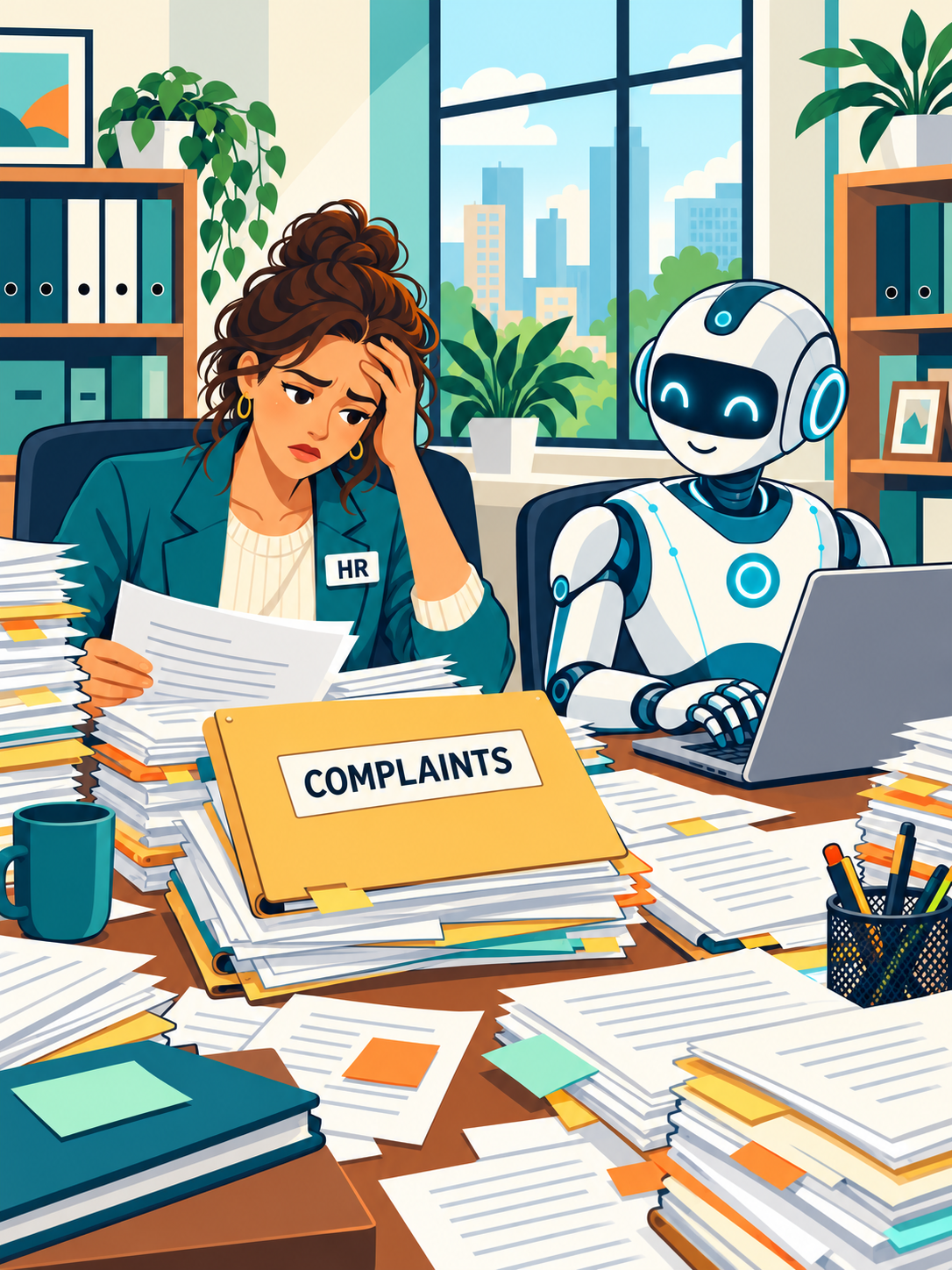
Today, an employee can describe a situation to an AI tool in plain language and receive a detailed response within seconds. The technology can explain employment legislation, identify potential policy breaches, suggest whether particular conduct may constitute bullying or another workplace issue, and draft a formal complaint complete with headings, timelines, policy references and proposed outcomes. Australian HR Institute, Lawyers Weekly and HRD Australia have all reported examples of AI-assisted workplace complaints and employee correspondence.
The important point is that AI may not be creating more workplace disputes.
There is currently limited evidence to suggest that AI is causing employees to experience more bullying, more conflict or more workplace issues. Equally, there is not yet strong evidence proving that AI-generated complaints are more likely to succeed than those prepared without AI assistance. Success will always depend on the underlying facts, evidence and merits of the case.
What AI may be doing, however, is making it significantly easier for employees to formalise workplace concerns.
That distinction is important.
A concern that may previously have been raised verbally with a manager can now be transformed into a professionally written document that appears, at least on first reading, to resemble legal correspondence. The complaint may contain references to the Fair Work Act, workplace policies, psychosocial hazards, procedural fairness obligations and previous legal decisions. Whether those references are accurate is almost secondary to the fact that somebody now needs to review and verify them.
This is where the workload challenge begins.
A complaint does not become valid simply because AI helped draft it. However, neither can it be ignored because AI was involved in its creation. HR teams still need to assess allegations, verify legislative references, review supporting information and determine whether a formal investigation or response is required.
In effect, AI may be reducing the time required to create a complaint while leaving unchanged, or perhaps increasing, the time required to assess it.
This observation is increasingly being reported by practitioners. In one Australian example, HR leaders described grievances that were more structured, contained legal references and required additional checking of legislation, policies and supporting records despite there being no corresponding increase in grievance volumes.
For HR professionals already managing growing compliance obligations, psychosocial risk requirements and increasingly complex workplaces, this trend presents an interesting challenge. AI may be providing employees with greater access to information and a more effective way of articulating concerns, but it may also be creating additional administrative burden for organisations attempting to assess those concerns appropriately.
This raises an important question for employers. If employees increasingly use AI to prepare workplace complaints, how should HR teams respond?
The answer may be that HR starts using AI as well.
Many organisations are already exploring AI for document review, policy analysis, grievance triage and case preparation. The intention is not to replace human judgement. Employee relations decisions involve context, credibility assessments, risk management and organisational considerations that require human oversight. However, AI may increasingly be used to manage the growing volume of information surrounding those decisions.
That creates a fascinating future-state scenario.
An employee uses AI to assess a workplace issue and draft a formal complaint.
HR then uses AI to analyse the complaint, identify relevant policies and assist with preparing a response.
The employee subsequently uses AI to review that response and determine their next course of action.
It is not difficult to imagine a future in which the first review of an AI-assisted complaint is undertaken by another AI system before either side reaches a human decision-maker.
Whether that future is efficient or concerning remains open for debate.
What is clear is that organisations may need to rethink some of their assumptions about AI and productivity. In employee relations, the technology may not simply be automating work. It may also be generating additional work by making it easier for employees to formalise concerns that previously would have remained informal.
The question for HR leaders is not whether AI is being used in employee relations. That is already happening.
The more important question is whether organisations are prepared for the impact.
Because AI may not be creating more employee relations issues.
But it may be making it easier to formalise them.
References
1. Lawyers Weekly (11 July 2025), AI tools give rise to a new breed of employee complaints, partner warns. Practitioner observations of AI-assisted workplace complaints becoming more frequent and sophisticated.
2. Australian HR Institute (23 June 2026), Every employee now has an AI lawyer in their pocket: Is your organisation prepared? Discussion of employees using AI to draft complaints, respond to allegations and research workplace rights.
3. HRD Australia (21 September 2026), AI is turning grievances into legal-grade filings. Reports of employee grievances containing detailed legal references and increasing review requirements for HR teams.
4. Fair Work Commission (24 August 2026), Use of AI in Commission cases. Guidance on disclosure and verification of AI-generated material in workplace matters.
5. Fair Work Commission, Using AI to help you with your case. Guidance on appropriate use of AI when organising facts, researching issues and preparing workplace-related submissions.
6. SafeWork NSW, Managing Psychosocial Hazards at Work. Guidance that workplace investigations should remain proportionate to the circumstances and risks involved rather than the appearance or length of a complaint.