
Why HR Professionals Don’t Interview Well (and How to Fix It)
You’d be excused for thinking that HR professionals would be expert interviewees. After all, isn’t a big part of their job supposed to be hiring people? Shouldn’t they know the questions that they’re going to be asked and the model responses to shoot back? And won’t they have a reasonable idea of exactly what a prospective employer is looking for and how to present themselves and their skills in the best possible light?
That’s not my experience. In fact, sometimes the reverse is true. When it comes to sitting on the other side of the interview table, HR professionals can be poor performers.
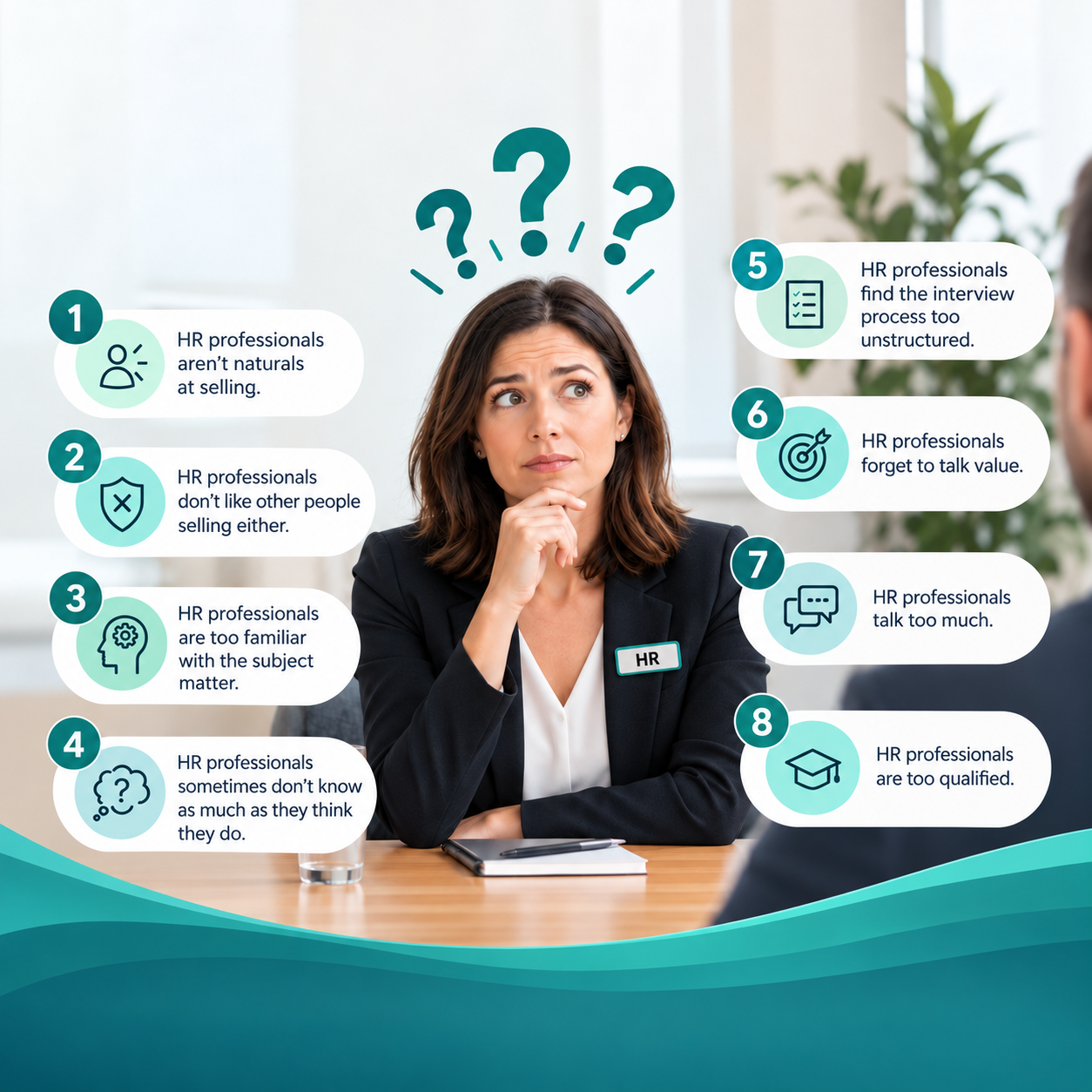
Here’s why I think HR people struggle, and what to do about it.
1. HR professionals aren’t natural sellers
Many HR people are self-reflective and hard on themselves. The last thing they want is to sound boastful, so they undersell. You don’t need to hype yourself. You do need to say clearly what you did and what changed because of it.
2. HR professionals don’t like being sold to either
In my years in recruitment, I’ve noticed that most HR people dislike hyperbole. That makes them hold back in interviews and hope their experience speaks for itself. It rarely does. Interviewers can only assess what you tell them.
3. Knowing the process isn’t the same as preparing
You’ve run thousands of interviews, so it’s tempting to walk in without preparing. But you’re now the candidate. Prepare examples, research the business, and know your story.
4. Interviewing and being interviewed are different skills
In my experience, many HR professionals see recruitment as operational rather than strategic, and the disconnect can grow with seniority. Interviewing well is a skill in its own right. Practise it out loud, not just in your head.
5. HR interviews feel casual, but they aren’t
You’d run a structured process for other roles. When it’s a fellow HR professional, the conversation can feel like a chat between colleagues, and that’s where candidates over-share or drift. Technical skills are often assumed, so the interview is mostly about judgement, fit and discretion. Treat every conversation as an assessment.
6. HR professionals forget to talk value
Describing what you did isn’t enough. Show how it helped the business, in numbers where you can, especially if a CFO or finance leader is involved. Only use figures you can back up. And drop the jargon. Plain language lands better with the people you’ll be working with.
7. HR professionals talk too much
Most HR people are passionate about their work and will happily explain it in great detail. Most interviewers are too polite to interrupt. A long interview isn’t necessarily a good one. Aim for clear, concise answers of about two minutes.
8. Senior HR professionals can come across as too far from the work
Some candidates have so much experience they can’t decide what to leave out. Others assume they’ll never need to be hands-on again. With senior roles tighter, this matters. The candidates I see stand out pair strategic thinking with a willingness to get involved in urgent ER matters and sensitive operational issues. Show both, and keep your examples relevant to the role.
This week’s action: Write down three examples that show your judgement, influence and impact. Practise each one out loud in under two minutes.
If you’d like to become a stronger interviewee, or access the best HR candidates for your business, get in touch.
〰️
If you’d like to become a stronger interviewee, or access the best HR candidates for your business, get in touch. 〰️